
The benefits of team sports
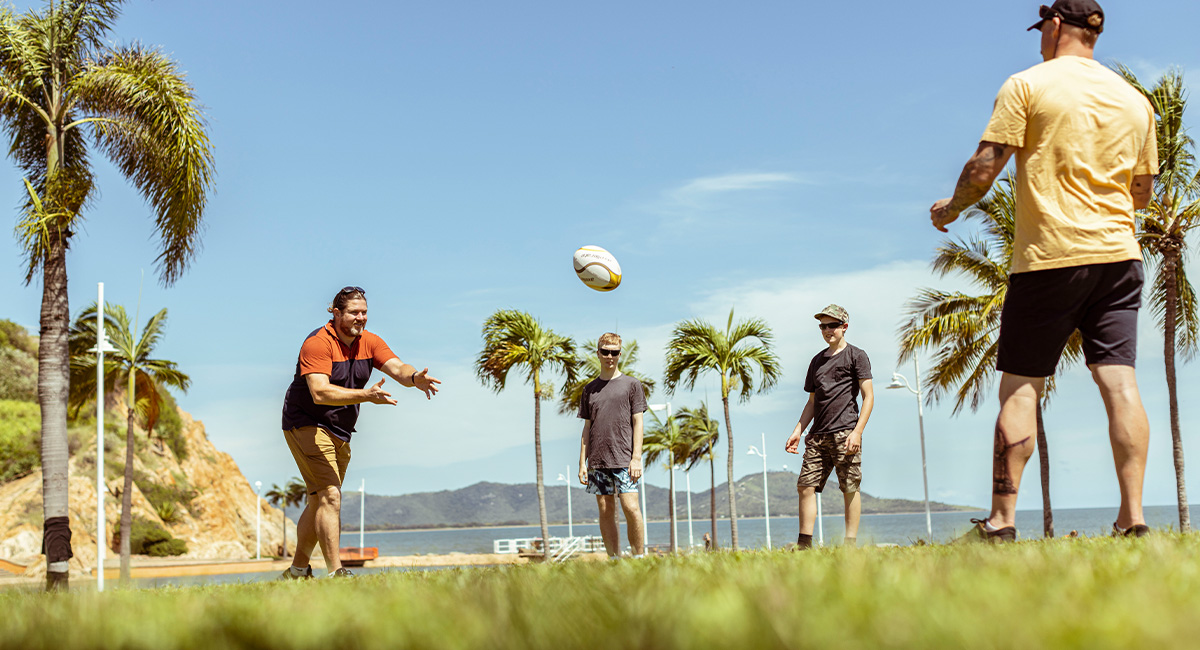
Whether playing, volunteering or cheering from the sidelines, team sport can support physical health, mental wellbeing and social connection for veterans, current serving members and their families.

Transitioning out of the Defence Force can see veterans face a range of new challenges and adjusting to a new fitness mindset can be tricky to manage – starting with the basics is a good step forward.
Exercise can play a key role in supporting a veteran who is adjusting to their new “normal” following their transition out of the military.
As fitness is common to both those in the military and in the community – although the intensity and purpose may differ greatly – it can be used to help gently reintegrate veterans with life outside of the Australian Defence Force (ADF) and adapt to a new identity.
However, re-learning the cultural norms of undertaking exercise post-military can be challenging, and understanding the foundations of movement, with the right support, can help.
Rethinking your approach to exercise
Military uses exercise to train you to be fit and functional on a battlefield, and while civilians don’t need to train to this level, it can be difficult for veterans to unlearn this behaviour.
Veterans are therefore susceptible to what’s known as the “boom-bust” cycle, potentially due to the cultural fitness norms adopted within the ADF.
The “go hard or go home” attitude perpetuates the idea that every session must be high-intensity and taking it easy is seen as “weak”, so let’s look at this boom-bust cycle:
The solution is to relearn new habits around exercise which will allow you to pace yourself slowly into training, diversify your exercise types away from just running and weights, adjust your cultural views of exercise, and learn to listen to your body and train how you feel on the day (called intuitive movement).
The benefits of relearning your fitness habits
More balanced exercise and movement behaviours and beliefs may help veterans to:
How to shift away from the military mindset
Relearning new fitness habits after transitioning out of the Defence Force can be difficult if you have lived your entire adult life in the uniform.
Identifying and questioning behaviours which may be functional to keep you safe on a battlefield but no longer serve your civilian life (e.g., pack-marching 15km) is a helpful way to reflect on what is useful or enjoyable for your new life and what is not.
Take the time to actively seeking out and engaging in civilian activities, exercises and lifestyles which support your personal values, such as spending time with family, freedom and fitness for travel, reducing the impact of disease on your quality of life, etc.
It is also important to have patience with yourself and understand that this is a time of transition, and structures in your brain are changing and adapting to your new environment and culture.
Think of the time and training took you to become accustomed to military culture – how long might it take you to adjust back?
An exercise professional, like an exercise physiologist or physiotherapist, can help with this process, guiding you in a more balanced and healthier that supports long-term health and wellbeing.
Psychology or counselling support may also help you identify beliefs or behaviours which no longer serve your new life.
Support at Mates4Mates
Mates4Mates have a range of physical rehabilitation services available to support your return to exercise, including appointments with an exercise physiologist or physiotherapist and group exercise classes, as well as mental health support through psychology and counselling.
Group-based clinical programs and workshops are also available, designed to improve your relationship with and understanding of exercise, and assist in transition. This includes the Foundations Of Movement Program which will open for expressions of interest in July for its August intake.
To find out how Mates4Mates can help support you, reach out to us on 1300 4 MATES (62 837) for a confidential chat.
For more information on exercising right for your health and wellbeing, the Exercise Right website is a useful resource.
Written by Andrew Crawshaw, Mates4Mates Exercise Physiologist
Whether playing, volunteering or cheering from the sidelines, team sport can support physical health, mental wellbeing and social connection for veterans, current serving members and their families.